An Interview with Sandy Florian
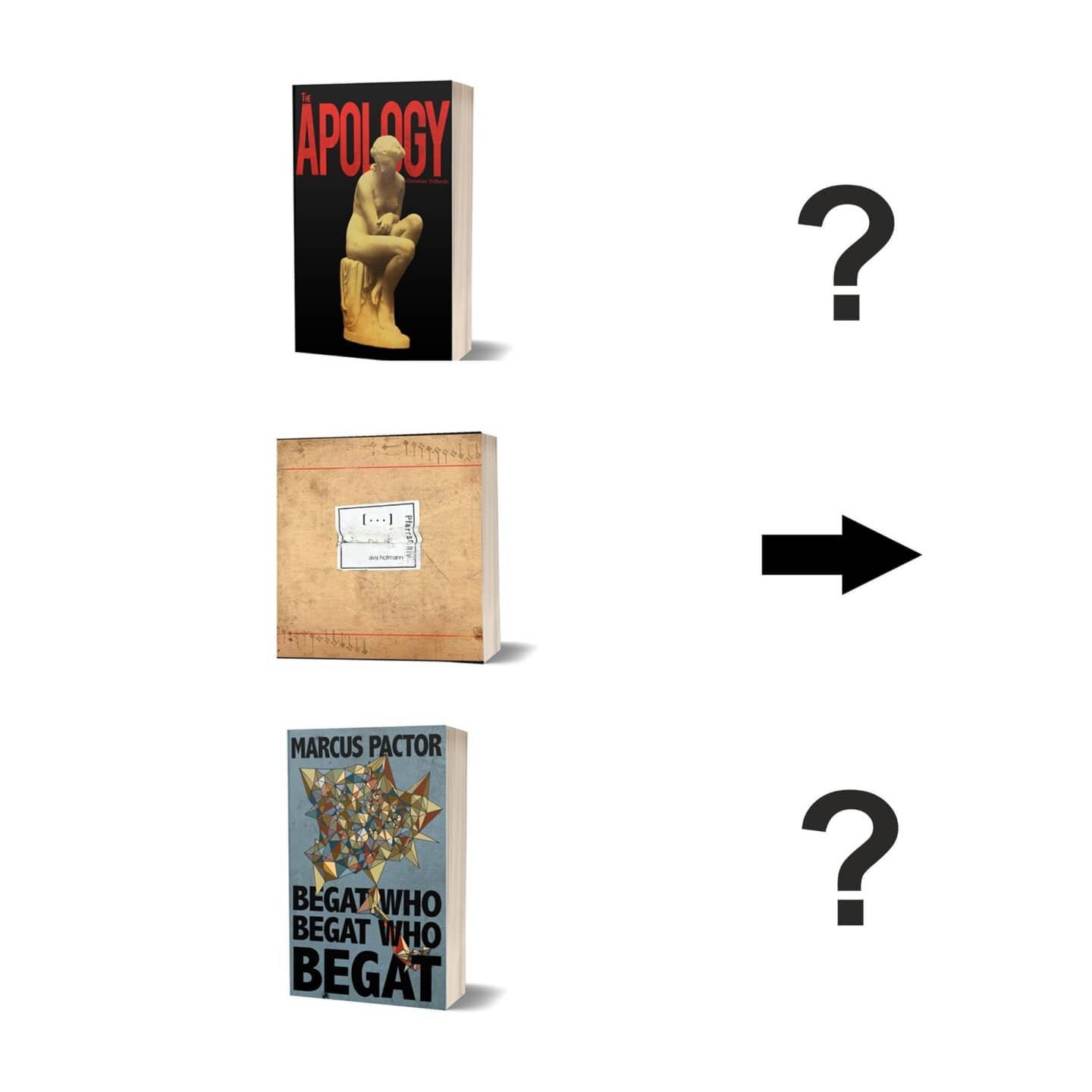
Sandy Florian is a writer who at first may seem as if she is caught between the two worlds of fiction and poetry; however, if one gets to know Florian's work, s/he begins to understand that Florian is constructing a new methodology of writing. Her work is unique in spirit and delivery. At times her philosophies remind me of Bruno Schulz as she wants to create myth and at other times her philosophies remind me of Gertrude Stein as her prose purposefully works against the rules of punctuation to achieve a precise rhythm or meaning. She has two books available on Action Books and one available on Tarpaulin Sky. You can find out more about Sandy and her work if you stop by her blog. I have had the great pleasure of knowing Sandy for four years and it is now my distinct pleasure to introduce her to you.
Well, as a genre bender, yes and no, I do and do not classify myself as a hybrid writer. And while, yes, to me all generic labels are very problematic, there is something about the word hybrid that insinuates a superimposition or an uninvolvement in the writing process. Like writing hybridizations is somehow passive writing, I don’t know. But it’s because hybrid plants are produced by a third party human, a third party majesty who impregnates pistils with pollen without plant participation. In the animal kingdom, hybrid animals are considered mongrels and mutts. And while they might be the strongest of the species, the most Darwinian of the survivors, I would rather consider myself a purebred, a thoroughbred, from an pure-blooded pedigree of writers whose active action is the manipulation of awareness through manipulation of language.
In other words, I consider myself an artist, a language artist who approaches the medium of language like a painter would approach a canvas and paint. Like a sculptor would approach a piece of marble, perhaps, while chipping away to see what it’s made of. I am fascinated by the materiality of language and its ability to make art, to make myth, the make law, to make religion, to make belief and to make believe. This is why I write. And if I write prose poetically, it’s because I’m influenced by a line of other poetic prose writers like Woolf and Faulkner and Gass and Ducornet. Pynchon. Gaddiss. Beckett. Acker. The list goes on. I’m not alone. My work may or may not be more distilled than some of these writers, but it’s the attention to the materiality of language, I think, that sets these writers apart from traditional story-tellers. And don’t get me wrong, there are great writers whose sole goal is story. I’m just not one of them. I’d rather work with words to unpack them, unravel them, to disassemble them and reassemble them, to approach them with respect for the power they have, and to try to treat them with the attention they deserve.
Poets do that, yes. More so than most prose writers, I think. But for me, with my prose books I’ve been wanting to communicate what I sense is my claustrophobia of language. My recent “poetry” books, on the other hand, which are oddly more narrative than most of my “prose” books, deal more with language as installation, language as line-drawing, in a manner similar to that of the Maximus Poems.
So, I guess my generic slants from book to book have more to do with the word or words or the ideas I’m approaching. The word “beastly” or has a lot of color to it, don’t you think? It’s kind of a Pollack. The word “no” is gigantic and inescapable, like a Cristo. The word “well,” on the other hand, is more private, more blind. I think of silence and solitude. Only a line-drawing would work. Does that make sense?
How did your last book The Tree of No begin? Do you have a writing process or do you write when you have the time?
Well, the decision about what to write and my writing process are two very different questions. So, first, The Tree of No started in my Milton course at the University of Denver. In that course, w
e read Paradise Lost, Blake’s Milton, Radi-os, West’s Sporting With Amaryllis, and probably some other books that I’ve since forgotten about. I had never read Paradise Lost and when I did, I was frankly disappointed. I couldn’t “see” anything in the poem. It didn’t move in any direction until very late. Reading it felt like running on a treadmill. I felt [it] was colorless, flavorless, rhythmic but ponderous, exhausting and dull. More importantly, I felt it didn’t unpack what to me is the most crucial development in the book of Genesis: the question of language and of God’s voice, which is something I think Shakespeare could have addressed with far more grace.
Radi-os was an even further disappointment. The fact that RoJo took only the first 4 books of PL, I thought was an astonishingly bad decision, especially considering that, in my opinion, PL only begins to pick up, if it can be said to pick up at all, with Adam and Eve in books 5 and 6. But further, I was surprised that I could turn page after page of Radi-os and find not one interesting word, not one interesting focal point. That Davenport compared it to Joyce’s Finnegan’s Wake I felt was frankly preposterous. I mean, come on, Finnegan’s Wake?
Anyway, going back to your question, I decided that I was going to try to rewrite the myth using the kind of language I thought Genesis deserved. I wanted it to be beastly. I wanted it to be bloody. I wanted it to be philosophical and revealing, and I wanted it to be hallucinatory as only an awakening from undifferentiation could possibly be. I’m not sure I accomplished that, but it’s what I wanted. So, I went on a two month writing retreat and read the bible pretty much cover to cover, generating my own erasures of the PL, as well as much of the Bible, and filling up the empty spaces that RoJo left void with my own words. I loved writing that book. It was easy because it was so free. It was a blast.
As for my writing process, yes, I have a pretty steady practice that I undertake when I write, and much of it is not easy or free. I follow pretty religiously Julie Cameron’s advice to start off my practice with “Morning Pages.” I hand write 3 pages of solid, wall-to-wall nonsense without erasing or crossing anything out. I write trash. I just get it out and leave it alone, because there’s something about putting all my garbage on three pages that I think loosens up the necessary neurons that enable me to enter my work with an open mind. An open heart. Occasionally I try to save time by skipping these Morning Pages, but at the end of the day, I find my work is too stiff, that it lacks flow, that most of it needs to be slept on and rewritten.
I also have a pretty steady exercise routine that is also instrumental to my work. I run, and I practice yoga. If there’s something that I can’t solve, some question that I can’t answer, I’ll put the problem in my mind and go for a run. Frequently, after a couple of miles, when I’m not thinking about it, the answer will just come and be right. Yoga, on the other hand, helps my language flow. I don’t know. I guess I’m one of those people for whom it’s true if I don’t use my body, my body won’t let me use my mind. I don’t think that’s true of everybody, though. I wouldn’t teach my students to exercise. But I do teach them to free write because that can be magical.
You are a bit of a globe trotter, how do these traveling experiences inform your writing?
Huh. Well, I guess I do get around a bit. I’d love to say that traveling has been important to my work, but it really hasn’t. For me, writing is a truly interior practice that has very little to do with my actual life.
Stemming from the third question, how much of your work do you consider autobiographical? I ask because I know you’re focusing on the art of the memoir lately, and I’m curious if this is something towards which you are working or part of your process for some of your earlier work?
I don’t write autobiographically at all, unless you consider my philosophies autobiographical. I worry about things, and I write about things that I worry about. In that sense, my books reveal something about what I’m thinking and feeling, what’s on my mind, but not what I’m experiencing. I mean, I would love to say that I’m in love with a corpse, as my main character is in The Tree of No, but that obviously can’t be true. Instead, my character exhibits something I think to be true of the human experience. That living and loving can only be experienced in relationship to death. That living alone without knowledge of death is not interesting. And that we can only begin to love when we approach feelings of loss.
You are right, though. It is true that I spent a lot of time last year reading the genre of the lyric essay and focusing my attention to how other writers were handling the genre. I was curious to see if there was something in there for me to learn. In the end, however, I learned only that as a genre bender, I can’t truly call myself an essayist, since most essayists, like their predecessor Montaigne, keep their autobiographies at the forefronts of their work. My life is pretty uninteresting. No matter where I am, I write, I teach, I run, I practice yoga, I hang out with friends, not much else. I’m really dull unless you take into account my worries. And then you hit a whole bucket of knots.
Your work violates the “rules” of grammar and punctuation frequently. Is there a reason for this outside of sound and timing?
Rules change! I don’t know. Yes, I have my own rules that vary from sentence to sentence. For example, I like putting things in threes. I think they make more internal logic that way. I think a lot of my writing is based on the rules of the sonnet. 3 4’s and then a zest at the end.
You are a very productive young writer; do you circulate multiple manuscripts at one time or do you tend to focus on your writing one book at a time?
I definitely feel anxiety if I’m not circulating at least one manuscript at a time. It has to do with flow, I think. It has to do with the exchange of communication. If there’s nothing circulating, there’s no flow, and something gets stagnant. So I constantly write, yes. And stick to one project at a time, for the most part. But this year, I wrote two really fun short books while I was in the middle of writing a much longer project that’s probably going to take another year or so to complete. This is the rewrite of my master’s thesis, Boxing the Compass. The original version is not very good, I don’t think, though it did get some attention from some small presses. This new version, which is admittedly far more mature, is laborious and exhausting to write. You might have noticed I give updates on it on Facebook. I complain about it all the time. Don’t get me wrong, I love the book, it’s a very important book for me to write, but I actually hate writing it. I’ve not really had this experience before. I usually enjoy writing. Writing is a practice that’s usually full of happiness. I make myself laugh out loud, for the most part. These two short books had me in stitches. They were so free. . . . But not this one. No, this one’s torture.
Anyway, yes, I imagine that if my two circulating books get picked up, I’ll probably put Boxing the Compass on hold again and write another short one, just to keep the flow going. To insure I’m circulating my work. I already have the project in mind. I’m really excited by that one too, but I don’t want to spoil myself with all these fun books when I know there’s hard work to be done. Right now, I’m about a quarter of the way through, so we’ll see how long it takes me.